Important
Contact your SE/AM if you have questions regarding Cloud Exchange installation, deployment, configuration, and upgrade/migration.
Only an Admin should install Cloud Exchange. The docker images are available on docker-hub. The setup script will check for prerequisites and connectivity.
For guidance on how to back-up your data and files for restoration after a clean install, or for disaster recovery, read this article: Backup Cloud Exchange.
To install Cloud Exchange:
- Review and ensure that all host and connectivity requirements have been validated before starting the install.
- Clone the
netskopeoss/ta_cloud_exchangepublic GitHub repository to a volume that has free storage space based on the sizing guidelines as specified in the system requirements. Always clone to any folder other than/usr/localto avoid a conflict within Docker.mkdir netskope cd netskope git clone https://github.com/netskopeoss/ta_cloud_exchange cd ta_cloud_exchange
Note
If you are a Beta user, run the following command during Step 2 to download the beta version of a release instead of the git clone command shown above:
git clone -b beta https://github.com/netskopeoss/ta_cloud_exchangeDuring step 2, while executing the setup script, opt IN to beta to use the beta code rather than the default action of searching for the latest GA version.
- Checkout the Desired Version.
Before proceeding, checkout the desired version of the repository. For example, to checkout version 6.1.0:git checkout v6.1.0
Note
Replace
v6.1.0with the version you wish to use. Refer to the Netskope CE GitHub Tags for a list of available versions. - Run these commands to copy and edit the
cloudexchange.configfile. If the configuration file is not created or updated with user inputs, the setup script will use default settings for the UI port, protocol, and randomly generated passwords for the maintenance password, JWT secret, and other parameters.
cp cloudexchange.config.example cloudexchange.config
vi cloudexchange.config
Note
- The maintenance and JWT Secret passwords are used internally within Cloud Exchange for database authentication. These passwords will be needed when restoring a backup.
- Non‑ASCII characters (e.g., accented letters, other scripts, emoji) are not supported for the maintenance password in Maintenance and JWT Secret Password. Some of the processes do not work and will cause system failures if you use special characters.
- Only use alphanumeric values for the maintenance and JWT token passwords.
- Execute the setup script and complete the setup:
python3 ./setup
Note
If you skipped Step 4, make sure to save the maintenance password and JWT secret generated during the setup script execution. These passwords will be required for future migrations or upgrades.
- Launch Cloud Exchange:
./start
The Cloud Exchange UI is now accessible with the system’s IP (https://<ip>).
Default User Login
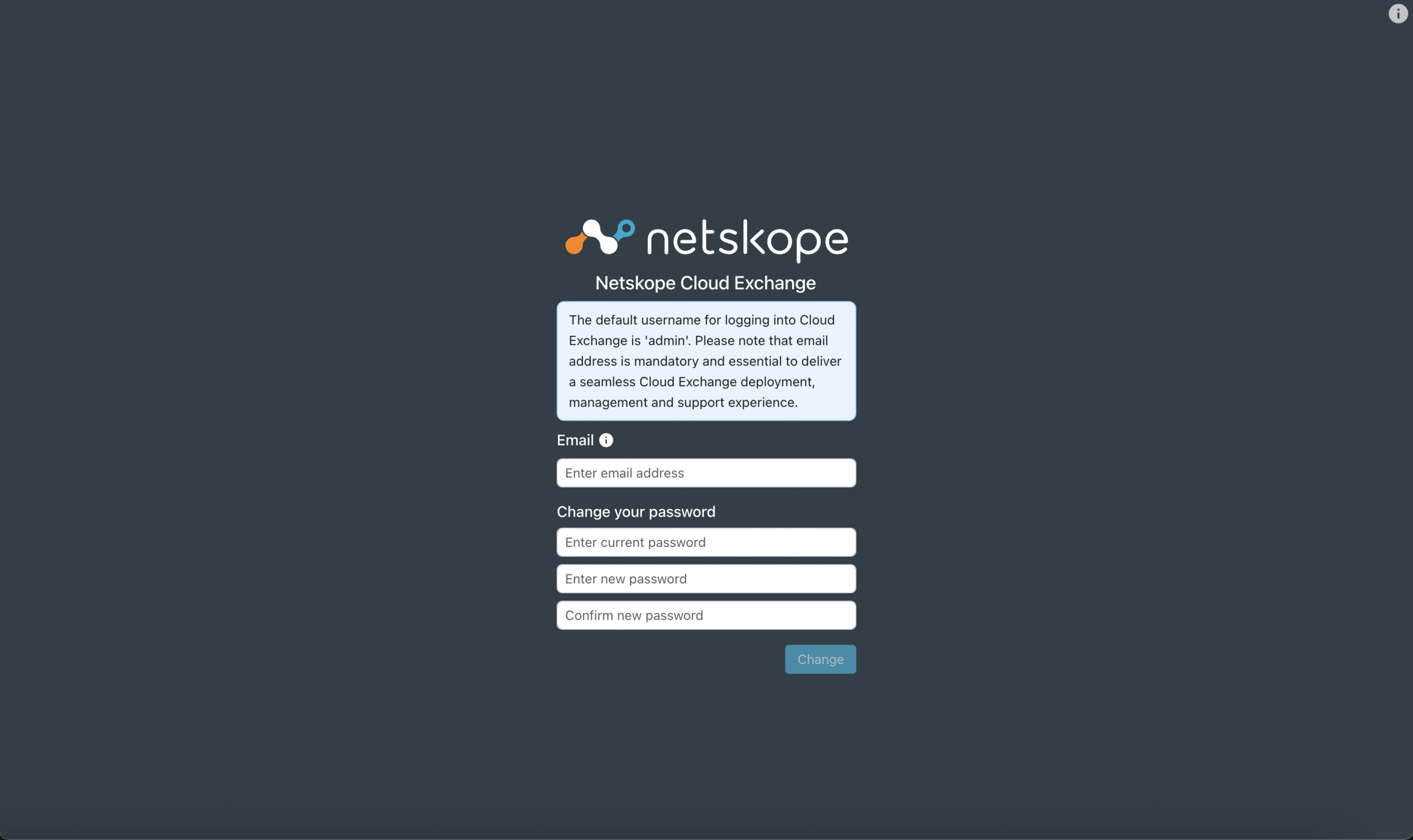
By default, a single user is created with administrative capabilities with these credentials:
- Username:
admin - Password:
admin
This user will have Administrator level access to the application. This user will have write access, and will be able to create new users as well.
On the first login, you will be required to change these credentials. After that, log in using your new credentials.