An admin can create, modify, or delete repositories. Manage a plugin repository here if there is plugin code referenced against an external repository. Plugin repositories support both public and private Git repositories. To use beta plugins, you’ll need to configure a new plugin repository pointing to the Netskope public github repo for beta plugins as shown here: Using Beta Plugins.
Click play to learn how to check for and download plugin updates.
- Go to Settings and click Plugin Repository.
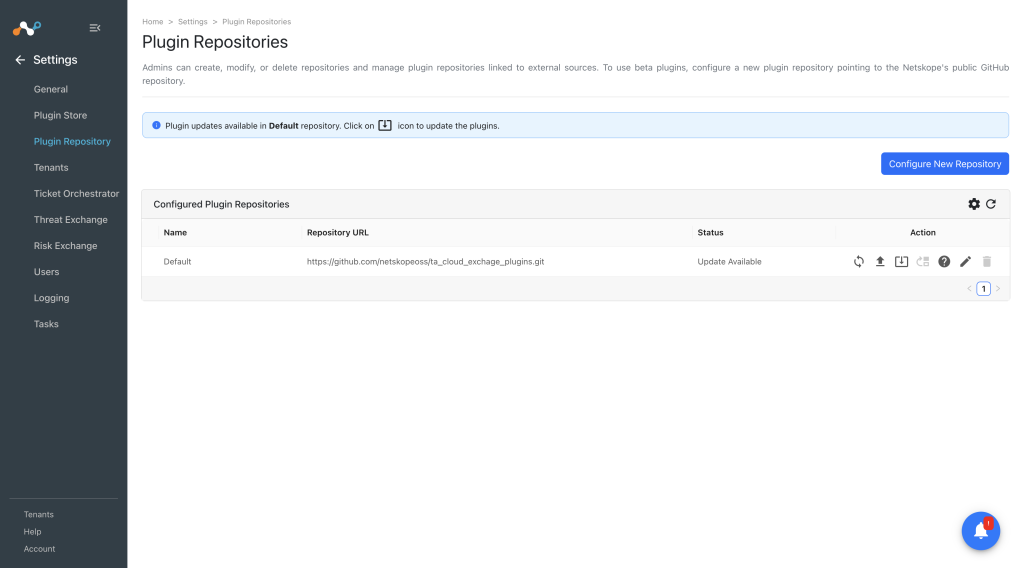
- Click Configure New Repository.

- Enter the following information for the repository:
- Repository Name: A unique name for this plugin repository.
- Repository URL: The Git repository URL.
- Repository Type: Select either Public Repository or Private Repository.
- Username: Required only when Repository Type is Private Repository.
- Personal Access Token: Required only when Repository Type is Private Repository.
- If you configure or edit a repository as a Public Repository, Username and Personal Access Token are not required.

- After one or more Git plugin repositories has been configured, you can check repos for plugin updates, and then update plugins, open the change log, and edit or delete repos.

- If a plugin update is available, the status will be changed from Up to Date to Update Available under the Status column. If a plugin migration is available from a beta/hotfix repository to default repository, then the status will be changed to Migration Available under the Status column.
For any updates or migrations, a banner will be available to guide the user. Click Update Plugin (image of arrows in a circle) to initiate the update.
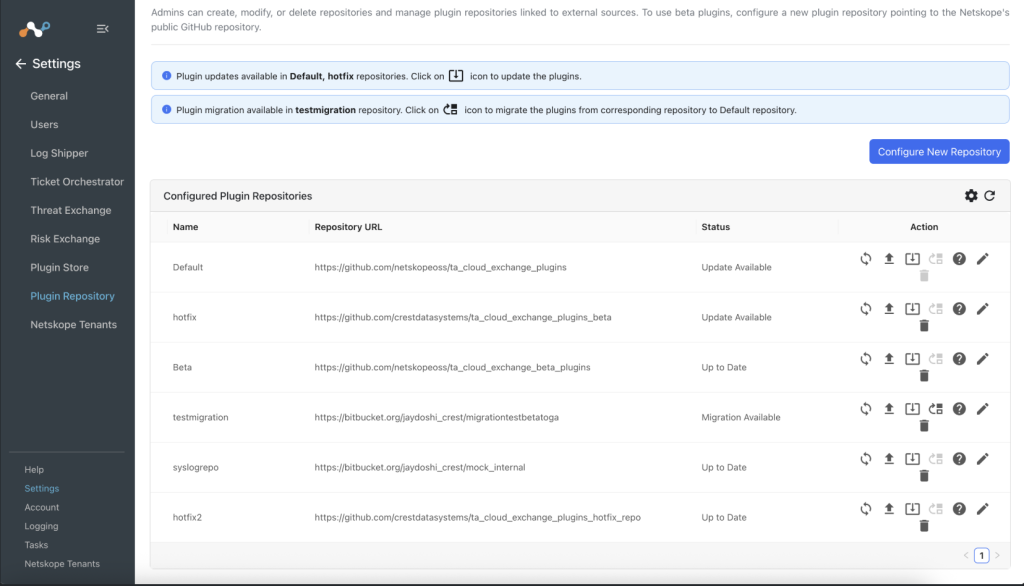
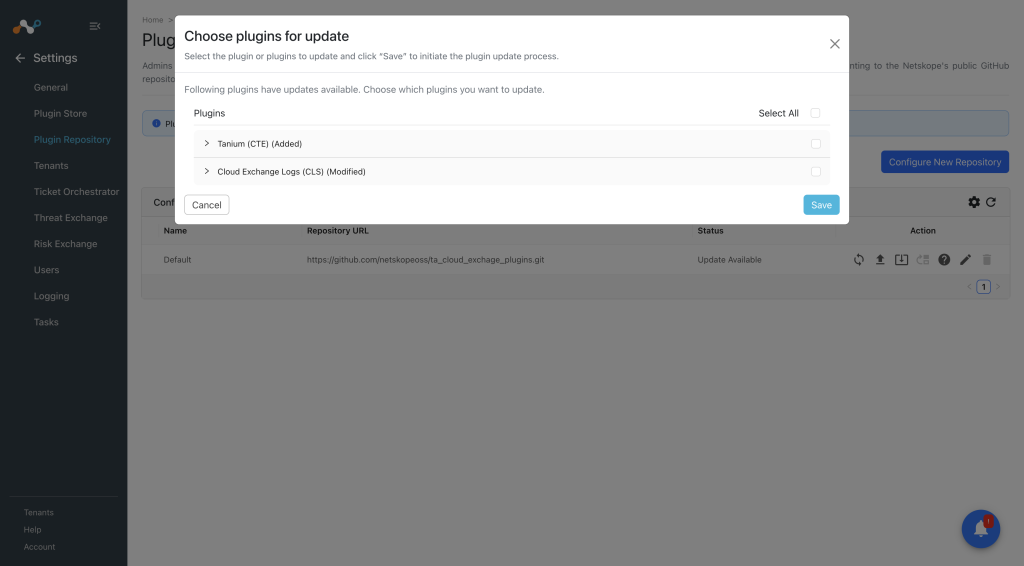
- Click the Download icon to start updating the plugins. In case of a migration, click the Migrate icon to start the migration. You can refer the banner regarding which icon to click. After clicking Update/Migrate Plugin, the UI displays a popup with the plugin name and change log for each update that is available.
Based on the core version, the compatible plugins are available to select for updating, and incompatible plugins cannot be updated. Select the plugin or plugins to update/migrate, and then click Save to initiate the plugin update/migration process.
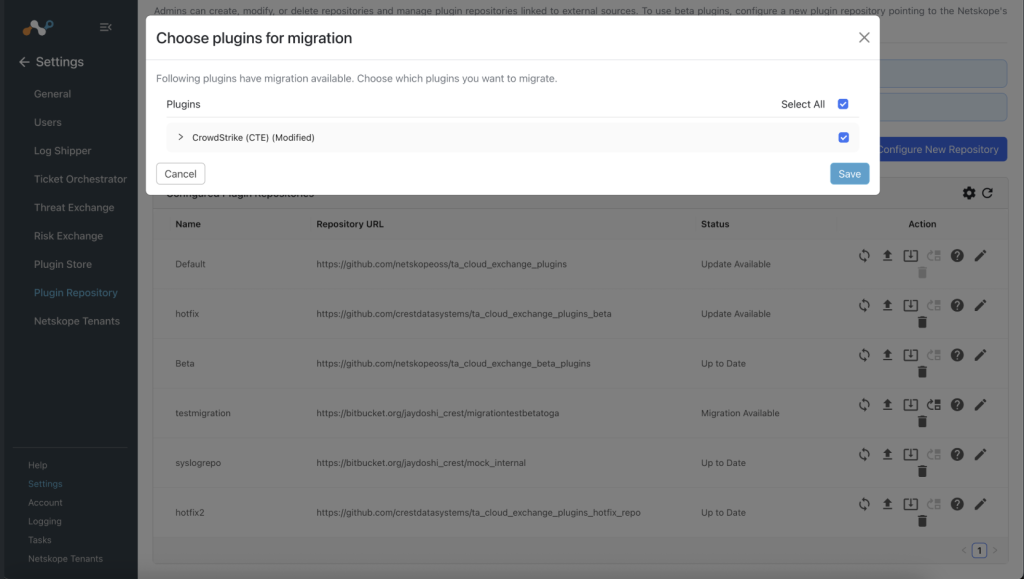
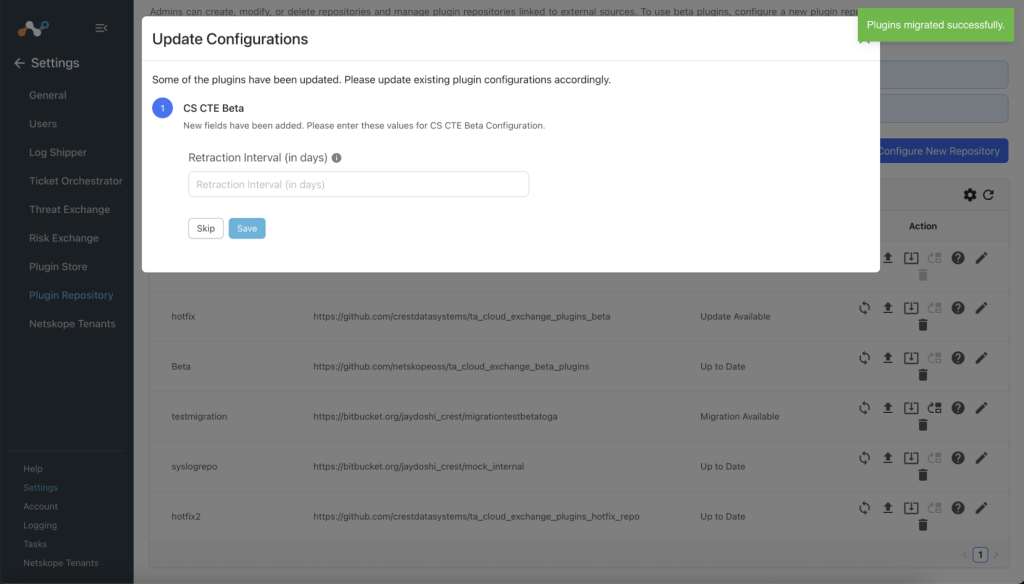
- If the update adds new fields to a plugin that was already configured, either enter the new field parameter(s) or skip. If you skip over the new fields, the current configuration will be disabled, and you’ll need to go to the Plugin page to re-enable it.
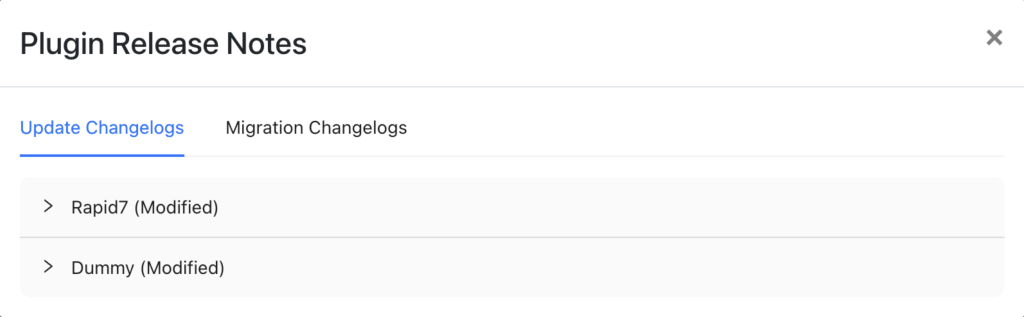
- Selecting the change log action will display the git plugin change log. The Update Changelogs tab lists all the change logs for the plugins that are available to be upgraded. Under the Migration Changelogs, you can check the changelogs for plugins that are available for migration. Click the Expand icon (>) to see the changelogs.